175. Your Brand of Peanut Butter
2020Show notes
This week’s bonus challenge: discuss coronavirus with Food Safety Talk.
You can hear the after show and support Do By Friday on Patreon!
Edited by Brian Hamilton
Engineered by Cameron Bopp
Show Notes
- Coronavirus Disease 2019 (COVID-19) | CDC
- Food Safety Talk
- Bacterial vs. Viral Infections: The Differences Explained
- Coronavirus outbreak: Scientists explain 3 ways the epidemic could end - Vox
- My COVID-19 Story. Brooklyn. : nyc
- Oliver Willis on Twitter: "Medical experts at the White House have to patiently explain to Trump that his idea of using the flu vaccine to address the coronavirus will not work.… https://t.co/tpXDej6y8X”
- Sarasota Student Quarantined Days After Classmates Shook Mike Pence’s Hand, Report Says
- Broke Lively on Twitter: "Twitter has moved “it’s depressing how this shit works” to “absolutely terrifying.” This first tweet (100K RTS) is wrong, the cloutchasing author (“a scientist”) hid replies repeatedly correcting them and urging them to take this down. The 2nd is correct (7K RTS).… https://t.co/LoIdv1t9Qs”
- Paige Lavender on Twitter: "Pence yesterday: “Get used to seeing us. We’re going to bring the experts in. We’re going to make sure to give you the best and most high-quality, real-time information from the best people in the world.”… https://t.co/0HfNv6rK1u”
- How to Make Hand Sanitizer: 8 Steps (with Pictures) - wikiHow
- LifeStraw online store | LifeStraw Water Filters & Purifiers
Transcript
Tap a timestamp or any sentence to play from there · machine transcribed (mlx:mlx-community/whisper-large-v3-turbo), expect mistakesSpeaker BWe lost Max. I hear you.
Speaker ANow I can't hear Max.
Speaker BIt says that Max is there.
MaxI'm here. I'm twisting some knobs. Guys, I got the Mac Pro. But does it have the wheels, Max? Does it have the wheels? No, I didn't get the wheels, but I did. I am so cocked by Apple that I did get the $999 screen holder. Of course. It's really nice. Yep. It's a really good screen holder.
Speaker BIt's the best.
MaxYeah. Anyway, I just unpacked this thing because I was like, well, what am I going to – society's going to collapse before I set up my Mac Pro and install all the software. But now I'm like trying to turn the dials. Can you guys hear me okay? Does it sound crisp?
Speaker BYeah, you sound good.
MaxYeah, you're good. All right. Let me make – is call recorder going? Let's see. It says it's recording.
Speaker BYeah, call recorder's going here.
MaxHello? I don't know. All right. Well, who cares? Everyone will be dead by the time this comes out anyway. Hello. Hello.
Speaker ASo we should figure out – so here's the thing. So we just posted a Food Safety Talk episode. Great. We have another episode in the can that Ben is working on. I think we should put this out as a special Food Safety Talk episode where basically you just pepper us with questions. about coronavirus.
MaxYeah. I would love that. I would be delighted by that. And maybe we can cross-post in the Dubai Friday feed and do a little...
Speaker AWell, you know what they do in the comic books, Max, when they have a crossover? Like, they may start in Spider-Man, but they end in X-Men. And so when Ben is on Dubai Friday, that's the second half of the story arc, you see?
MaxI see. So you're saying... So I'm talking to Dr. Donald Schaffner of Rutgers University who's saying that if you get the coronavirus, you can mutate.
Speaker BRight.
MaxIt will give you powers.
Speaker BWell, let's hope so.
MaxYeah. All right. Well, do you guys want to do a little intro? Should we introduce ourselves? Yeah, sure.
Speaker AOkay. So hi, Food Safety Talk listeners. This is Dr. Don Chapner from Rutgers University, one of your regular co-hosts on Food Safety Talk.
Speaker BAnd this is Professor Ben Chapman of NC State University, one of the other normal Food Safety Talk co-hosts.
MaxWell, normal is kind of a strong word.
Speaker BNormal, yeah, like a normal, normalized.
MaxAnd this is Dr. Max Temkin. I'm an epidemiologist with the Center for Disease Control calling in from Atlanta.
Speaker BWelcome, Dr. Temkin.
MaxThank you. All right. I have a little list of questions. Can we get into it? Let's do it. Let's go. Okay. What is a virus and why is it different than a bacteria? Basically, what I know is you can take antibiotics if you get a bacteria, but if you get a virus, you're fucked.
Speaker AYeah, sometimes. Well, you can't take an antibiotic. You can take an antiviral.
MaxOkay. Well, see, we're already learning. We're already learning. But here's my question. How is it possible that I've made it through secondary education, and I'm like a 30-year-old man, and I really don't understand? I know that there's a difference between bacteria and virus, but I don't know what they are. They're little things.
Speaker AThey are. They're both little. They're both microscopic. Viruses, according to some definitions of life, viruses are not technically alive. So they have an inner core that's nucleic acid. It could be DNA or RNA. So humans have DNA and RNA, but our primary nucleic acid that we use to encode our genetic material is DNA.
But viruses are either one or the other. And then that DNA and RNA is surrounded by a protein coat. and then that protein coat may have an envelope around it or not have an envelope around it. And that envelope, and we'll get to this in a minute, is what helps the envelope viruses attach and actually infect cells. And so, but the key thing to remember about viruses is they're technically not alive. And what they do is they basically come up to a cell that is alive and they have a way to inject their DNA into the cell
And then that DNA or RNA, that nucleic acid, basically takes over the genetic machinery of the cell that's actually alive and then basically turns it into, like, making lots of viruses. And then eventually that cell dies and then those viruses spread. And so viruses are just this weird thing that has evolved in nature to sort of piggyback on things that are actually alive.
Speaker BAnd the only thing to add is that bacteria exist and can grow, some of them, outside of bodies, and they can grow in water. As long as there's nutrients there, you can have one bacterial cell grow to this entire colony, but it doesn't need a host. It doesn't need to get inside an animal or a plant where viruses can't replicate unless they're inside of something.
MaxBecause they need the existing cell.
Speaker BYeah, they need those cells to take over.
Speaker AYeah, because they only have a protein coat, and they have this nucleic acid core, and that's not enough to make more viruses. Viruses are subject to evolution like living things.
MaxAbsolutely. So you would say what it wants is to survive and reproduce.
Speaker AAbsolutely, yeah. And there's all different kinds of viruses, right? There's viruses that only infect plants and only certain kinds of plants. There's viruses that infect people. There's some that, in fact, that can cross between animals and people. There's even viruses that only affect bacteria, and those are called bacteriophage. And we actually do a little bit of research with bacteriophage in my laboratory. And actually, Ben's been doing some research down there in North Carolina with bacteriophage as well because they end up being a really nice model system for studying how viruses or even how other microorganisms might move through food through cross-contamination and stuff.
So it's a whole world out there of viruses and the way that they work.
Speaker BAnd I'll add that I think what got me into microbiology, really, really got me into microbiology, were viruses. I always really enjoyed learning about what makes people sick and why. But the fact that this particle, which, as Dawn said, might be alive, might not be alive based on your definition, has evolved in a way to just absolutely hijack your cells or a plant's cells to make billions and billions more of itself and then use those cells to, like, explode them and spread it.
Like the, it is the sort of the purest evolutionary, like just make more and get it out there. And I, I mean, the really viruses are, are the thing that I find the most, the most fascinating out of all the little tiny things that we, that we do study. It's pretty – especially when something like this happens where you can kind of see how – to me, just how cool this weird little life form is and how over the millions of years that they've been around and interacting with us that they have figured out a way to take over our bodies and make more of them.
MaxIt's super cool. Well, Professor Chapman, this must be a very exciting time for you. Congratulations. Congratulations. Thank you. Okay, so why – it seems like different viruses, so like if you're talking about HIV, that's a virus, that's the V, right?
Speaker AYep.
MaxOr influenza or coronavirus. They spread so differently. Like the advice you get to not get different viruses is so different from one to the other. What is it that – is that understood? Like why is it that one – you get one one way and one the other way?
Speaker BSo, yeah, I mean, sort of it is, or in many cases it is. It has to do with the types of cells that that virus is most likely to infect and where inside the body or in a plant, for instance, it wants to be to take over that cell. Because our cells, although they have the exact same DNA throughout our bodies, the different types of cells that we have have different functions. And so it's not to say that these viruses couldn't infect other parts.
They just are much better at taking over the mechanics of different types of cells. And so we think about HIV looking at something that is really most likely to be replicated and then transmitted through blood versus norovirus, which Don and I work on quite a bit, that is a gastrointestinal virus that really likes to be replicating in the gastrointestinal tract, like in the stomach and intestines, versus respiratory viruses like influenza
and COVID-19, the coronavirus, where they just are more viable in replicating in the lungs and the respiratory tract. And it has to do with the type of virus it is, the structure of it. And this is the part that I think blows my mind is that as they've evolved, like norovirus is one that the symptoms of, you know, after it's created billions of virus particles, the symptoms that
happen is like this very like projectile vomiting. And that's a way to get the virus to more people. Like it's not just, oh, I'm vomiting in one spot. Now I'm really, really transmitting it by pushing it out. And I think that's the same kind of thing that we would see with respiratory viruses where a coughing response is really the virus's way of trying to get to more people.
MaxAnd when you say it's the virus's way, you mean like through evolutionary pressure?
Speaker BYeah. Yep. Yeah, exactly. that it's evolved into an organism or, you know, here a virus particle, that over time it has become more likely to be transmitted and spread to more people by this pressure, you know, evolutionary pressure over time.
Speaker AAnd the thing is it needs to spread. Um, it doesn't, it doesn't, if it kills the host too quickly before it can spread, that's not a virus that's gonna, that's gonna spread too easily, right? Unless there's, you have some, you know, practice in the culture of like, you know, eating, eating dead bodies or something like that, right? So there, so the mechanisms or the mechanics of what causes a virus to, to, to be able to, to, to be in, in a population really depend on the things that those populations are doing. So, for example, we think we actually Ben and I just heard today about a friend of a friend who got really sick and they were really worried that they had coronavirus.
But it turns out, no, they just got plain old bird flu, which is also just as bad. And we call it bird flu because it was believed to originally have crossed over from from from birds to humans. And so sometimes these virus can do this and they tend to do it in those environments where you have birds and humans in close proximity. like, let's say, the Asian poultry markets, right? And so, you know, there are cultural practices or there are certain scenarios that would cause, let's say, a particular virus to take off in a given population.
So it's really, and there's a lot we don't understand still, but what we do understand, like Ben said, it's really fascinating.
MaxYou know, as you were talking about that, Dr. Don, it occurred to me that the coronavirus is great branding. It sounds very scary. Corona. I don't know. it sounds like the sun, it sounds apocalyptic. And then I know they tried to rebrand, they got, you know, some agency on it and they were like, well, let's go with a COVID-19. That's not so good. It doesn't sound, it doesn't sound as good. I would advise them that that's not good marketing. I think the coronavirus sounds a lot, a lot scarier. So, yeah, so a couple of points. The
Speaker Areason why they, they rebranded it as COVID-19 is there are lots of coronaviruses. Like I was at a microbiology meeting the other day, and one of my microbiologist colleagues comes up to me with the sniffling and he's rubbing his nose. Yeah, I got a little coronavirus. And so there are, there are, which, and it was actually true, right? So there are, there are many kinds of coronaviruses, but this particular brand of coronavirus, right, is the one that is that everybody's worried about. And so we want to, we want to be able to talk about this specific one instead of coronavirus
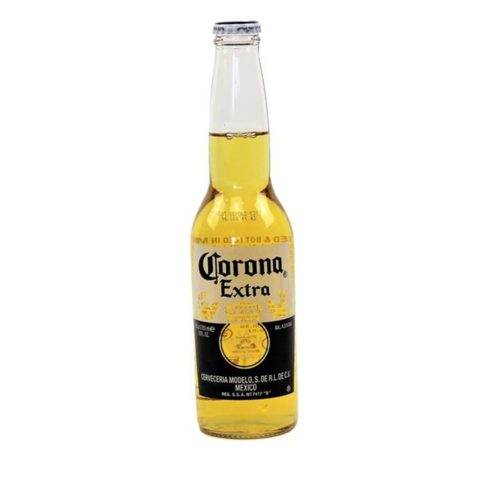
generally. But, but I have, Ben, I have a, Professor Chapman, I have a very important question for you. Should I stop drinking Corona beer? I think you answered this really well on
Speaker BTwitter. Corona beer is not the greatest beer. It's got nothing to do with the virus. Here's the thing.
Speaker AYou should stop drinking Corona beer because it's terrible beer. Yeah. Yeah. Do not get Corona beer.
MaxYou're going to want to stockpile water, beans, ammunition. You're going to need a solar stove.
Speaker BThe Corona will not help you. You're going to need cables. You're going to need lightning cables. You're going to need all the cables that you can possibly need just because we may run out of those as well. And just for full disclosure, because I'm wrapped up – all wrapped up in big beer, my hockey team is actually sponsored by Heineken. So clearly the world of Heineken is benefiting from this coronavirus misbranding.
MaxAll right. Well, listen, I don't want to get – I don't want to repeat if you guys have already covered – I'm not up to – you know, I listen to your podcast on like a six-month delay. So I don't know if you guys have gotten into this, but to me, the obvious thing I want to ask about is like, I guess the next questions I want to get into are like, what do we know about coronavirus? Like, what's the sort of scientific knowledge that we have about it? And then I want to get into like prevention measures, which is probably what most listeners want to hear about, which is like, you know, should you be, should you, should we be, should I, should I rob my neighbor and take their Purell is what I want to know.
Well, that's not a nice thing. No, I've already stockpiled all the N95 masks in the city of Chicago.
Speaker BExcellent.
MaxAnd I have a new technique. I wear it half on, half off.
Speaker BUh-huh. And is that for marketing reasons? Or just as like an F you to the virus?
MaxNo, it's keeping me safe. It's keeping you safe. I put it on over my beard. Okay. All right. Can we get into that stuff? I don't know if you guys are sick of... No, no, no. No, it's fine. It's fine. So, okay. So tell me about, what do we know about coronavirus so far? Because one thing is, like, I've probably read a bad amount about it. And it seems to me as, like, a media consumer that I'm getting a lot of conflicting information about the, what's the number that people say?
Is it the, what's the value of how many people you infect and you try to get it to not?
Speaker AOh, the R0.
MaxRight. So I've been reading about that, and I've been hearing lots of different stories about what people think the R value is, what people think the mortality rate is. I've heard different projections of how many people are going to get this thing. I've heard stories now that people are getting reinfected in China and Italy and things like that. I've heard that the testing doesn't work and that it does work. Where are we on this? What's going on?
Speaker AOh, well, I guess the first news, and this is good news for a hand sanitizer fan such as yourself, Max, is that unlike norovirus, which you need to get a special kind of Purell to kill, coronavirus is actually very susceptible to alcohol-based hand sanitizers. And that's because, and you have to sort of think about it in a weird way, like a norovirus is a non-enveloped virus, whereas coronavirus is an envelope virus. And you would think that a virus with an envelope would actually be stronger, but no, it needs that envelope to actually be able to infect cells.
And that envelope is actually relatively fragile. And so we believe that the alcohol disrupts that envelope. And so the good news is with coronavirus, alcohol-based hand sanitizers, even the generic Purell without the virus killing ingredients, will work really well against coronavirus.
MaxDr. Tom, you want to tell us about something you like? Yes. This week's episode is brought to you by the Purell Corporation. Oh, wait, I have one of those. Wait a minute. I'm at home.
Speaker AWell, that's good. Yeah. Except, but, you know, this is really interesting, too. So, again, I'll give you a little peek inside the tent. So I was at a meeting with a company that does this kind of stuff, and they were talking about how with the SARS outbreak and other things, they've learned a little bit about surge, right? And so the idea is all of a sudden you have a need to manufacture more of this. And part of that is that people are stockpiling stuff. And so they need to calibrate their surge because if you ramp up to meet the surge but people are stockpiling, what will happen then is that then you'll have a point where the distribution chain is completely saturated.
And then you'll be ramping up and ramping up and ramping up. And then eventually you'll not have sales anymore because the outbreak has quieted down and people are sort of going through their stockpiles. And so you really – from a company perspective, they want to understand that surge capacity and deal with it but at the same time not oversupply the market. And so it's actually a whole interesting sort of side discussion. But anyway, you're probably not here for the surge talk. So yeah, so what's your next question?
MaxWell, I mean, I know this is not exactly your guys' specific area, but what are you – I mean, give us the headline here, or I guess even just your opinion of it. Like how panicked should we be? I feel like I might be too panicked or I might be dramatically underpanicked.
Speaker BAnd there's probably somewhere in between.
Speaker AYeah, and I'll say, Max, I think the first thing that I said to you via text message when you first started talking about this is my standard response to people is, well, what are you doing anyway about the flu, right? And if you're not doing anything about the flu, why are you panicking about coronavirus? Because flu kills people every year, right? Our friend of our friend that's sick with bird flu, he's just as sick, right? And it's not a good situation.
And so you should do for coronavirus all the things that you're already doing for the flu. Now, one of the things that you can do for the flu that you can't yet do for coronavirus is you can get vaccinated, right? But you can also avoid sick people. You can stay home if you're sick yourself. You can wash your hands. You can use hand sanitizer. You can try to not be stressed because we know that when you're stressed, that actually weakens your immune system. So do some things to kind of de-stress. Those are all good things. Yeah. So, I mean, that's what I'm doing. Unfortunately, I've had to travel for work.
I was actually in Seattle last week. And just as we were leaving, we heard about the case in King County there. And so, you know, but it's like, well, what are you going to do, right? At the same time, you know, people are canceling travel plans.
MaxAnd the main things that people should be doing to prevent the flu that would also be the same things you do for coronavirus are, well, obviously wash your hands a lot, all the time.
Speaker BSanitizer. Yep.
Speaker AYep. Wash your hands as appropriate. I would say avoid picking your nose. Don't put your fingers in your eyes or your mouth if you can.
MaxIt's so hard not to touch your face. I know.
Speaker AThat's horrible advice.
Speaker BWell, maybe it'll help with the mindfulness of it. So coming back to influenza, because it's the one that I think I've learned more about this as this coronavirus conversation has gone on, and I try to put it into perspective. So in the U.S. in 2018, 2019, according to CDC, there were 35 million cases of influenza, 16.5 million medical visits, 490,000 hospitalizations, and 34,000 deaths.
and we don't seem to care as much about that as coronavirus. And then being in the world of communication and perception of risk a little bit for my research, I think it's because it's new, right? Like the fact that we haven't talked about coronavirus, people like to make jokes about it. It's topical. We're influenza. We've known about it for generations. And so I think our guard gets let down a little bit.
Even though the absolute public health risk of influenza to me is way, way higher, we're all kind of wrapped up in the hype of coronavirus. But as Don said, if you're worried about influenza, keep doing the same things. If you're not worried about influenza, well, this might be a good idea to be mindful of all the things that we do to control influenza because you're going to control both of these viruses.
in the same way. One of the questions that's come up to us, because we're adjacent to this, not being right in the infectious disease when it comes to respiratory, but it's like, well, what about eating at restaurants? What about are there foods that we should specifically avoid? And the thing that, you know, as I try to craft a message that's like usable there, I think about, all right, I go into a restaurant. There are a lot of high touch places where my hands are going to go, where other people's hands might go, or where someone coughs, the virus might get deposited.
So I think about tables, and I think about menus, and I think about door handles. And it's still the same management. Before I eat something with my hands, I'm going to make sure that I'm doing a good hand-washing step and using sanitizer, because if either of these viruses gets deposited in those areas, I want to make sure that I'm not putting it directly in my mouth.
But as we craft this, and this is one that Dawn and I haven't talked about, but over time, like if we started thinking about risk, you know, Dawn, would you, I'm starting to think about, okay, if you want to actually do something, maybe eating certain foods, maybe eating foods with your hands is not, that's a riskier step than eating foods with with utensils, especially if I'm not doing a good job on hand washing. I don't know how much risk it is, but if I'm removing that actual touch where my hands are on high-touch surfaces and then
putting it on a burger into my mouth, it might be less risky to use utensils.
Speaker AWell, but that may be true for norovirus, but again, and this came up in a question from a reporter today, like, is it spread via food? And the answer is, as far as we know, no, right? But what if there was coronavirus on your hand and you touched food and you ate it?
MaxDo we know for sure how it is spread? Because I've heard that there... So, I mean, yeah, I've heard that it's not airborne, it's spread by touch, right? Like droplets, basically, that you would touch where someone coughed. But I've also heard that there might be like a
Speaker Bgastrointestinal component? Yeah. So the gastrointestinal component's a little bit interesting. So the same with influenza. I did a little digging on this the last couple of days. You can find influenza in poop of people who are infected with influenza. The chance that it gets transmitted from that poop into food and then into the respiratory system, which is where the infections are most likely to occur. It's not that they can't occur in the gastrointestinal
setting, but the symptoms that we worry about and where people are leading to hospitalizations and dying when the infection is happening in the respiratory system, that's really our main focus. And I won't call this person out by name, but I posted a couple of things on Twitter yesterday about this, and I had a virologist who I work with who does animal virology who said, basically, yeah, the risk of this, like looking at all, whether it's bird flu or swine flu or any
of the other viruses that we've seen associated with animals, the risk of someone getting infected through consumption is really, really, really, really, really low risk. Is it possible? Yeah, So it's possible, but the symptoms are likely to be drastically different because the infection in my gut is going to be different than the infection in my lungs.
Speaker ARight. I mean, there's a reason why norovirus is spread the way that it is, and there's a reason why coronavirus is spread the way that it is, and that one is more adapted to the gut and the other is more adapted to the respiratory system.
Speaker BYeah. He mentioned – so I'll read from his DM. to me, um, he said that the, um, RNA inside the virus capsid can get, um, into the GI system and have replication with seasonal flu. So that's what we were talking about. He said it's rare in healthy adults, but in little kids in the elderly who may have had diets that lead to higher pH in the stomach, enough virus can pass, uh, to the lower GI where instead of furin protease of choice in the lung, the virus uses trypsin to activate. So his thought was the likelihood of that
transmission leading to real public health concerns is really, really, really low. But
Speaker Awe have to be careful in saying it's not possible. Right. Right. And that's the problem with science, right? And that's the problem with talking about risk in general is it's very difficult to say things in an absolute way. It's more a matter of you say things like, yeah, like you just said, right? This is highly likely and this is less likely. And so again, you need to make a decision about what to do. You should do things that you can't do everything, right? So you do the activities that help you manage the risk the greatest you can for the resources that you have.
MaxYeah. Could you guys, do you guys, I'm hearing in the news this idea of like R0 or R0. Do you guys work with that? Could you explain that idea?
Speaker AYeah, I'll take a stab at it. So what this term is, it's a surrogate for, it's a stand-in for infectivity or transmissibility. And as I understand it, and again, I'm not an epidemiologist or a virologist, is that this number represents the number of people that you would expect on average or median to get sick from one individual. So if one person is sick and they spread the infection to two people, that's an R0 of two. If they spread it to on average or mean or
median of one, then it's a value of one. But of course, this is not, and people are talking about, well, what's the value for this COVID-19? Well, it's dependent on a lot of things, right? If this virus is in a culture where there's a lot of hand washing and there's social distancing and you bow instead of shake hands with people, well, that's going to give you a different R0 value. And so, or if you have prevention or if you have vaccines, right? Like all of that is going to influence that value.
And so that value, you know, yes, you can always calculate the value, but it's not necessarily meaningful. It's more like, well, this is what the value is right now until we put these interventions in place. And now the value is going to be something else. So that's my hand-wavy, non-expert explanation.
Speaker BAnd one of the things that we have to keep in mind, whether it's the R-naught value, whether it's the fatality rate, is all these decisions are being made on a very small data set right now. Like all we really know, and so I just sent you guys an article that was published last week that tries to estimate the R-naught value for coronavirus, but just based on the Diamond Princess cruise ship, right?
So you have this very small system that doesn't look like the rest of society and looking at an R-naught value of 2.28. So does it look like the same in the nursing home in Washington state? Probably not. And so you kind of have to look at as we get more and more of these illnesses, we'll get a better view of what that is. The fatality rate as well, because I think it goes along the same situation here, it has really been based on the first 99 cases at a hospital in China.
And that's maybe not very representative of what it looks like in Italy, in the U.S., in Japan, in Iran. And one of the things that I had read about as it relates to that is just the sheer number of smokers, male smokers in China really could be contributing to what that fatality rate looks like.
MaxI know in the China data, I saw that the mortality rate was significantly higher for men than women. And people thought that maybe that data was explained by the fact that men are more likely to be smokers.
Speaker BYeah. And so all the things that we're talking about right now, the best data set, is only based on these little pockets of information. So is it really around 2% fatality? Well, in that specific population with those 99 cases, that's a pretty good guess. But what does it look like outside of that? I don't think we know yet.
Speaker AAnd a couple of points there, right? The fatality rate assumes that you know a denominator, right? And so what value do you use to estimate that denominator? But I want to come back to the cruise ship versus the nursing home, right? So if you calculate a certain fatality rate or you calculate a certain R0 value for a cruise ship, well, cruise ship, healthier people, so maybe a lower fatality rate, and also enclosed, so maybe a higher R0 value. nursing home, maybe they're more segregated, maybe not, but way more, you know, a frail population. And so, you know, the problem is like, there's just too many variables, right? But you can,
I mean, certainly it's a good idea to do this estimate. And I'm really glad that these people published this particular article because it's useful information, but you always have to take it with a grain of salt, or at least in the context of the study, you know, and not just extrapolate it blindly to everything. The thing that seems confusing to me about also about trying
Maxto follow some of these studies and these numbers is it's a little bit it's like uh looking at stars where it's like all we can see is the light of the star but whatever happened with the star has already happened it's like you know what i mean like like we're like you're seeing statistics of hospitals and testing and people who got sick but it seems like this thing people can have this thing and spread it to other people for a long time before they get symptoms and seek medical help so it's hard to get a you know in terms of like how quickly this thing is spreading or how dangerous it is, it seems like it's hard to get a handle on.
Speaker BYeah, yeah. And I think I would add in that here in the U.S., just not having testing kits available over the last couple of weeks changes a lot as those kits become more available, right? So we only know what we know because of what was available out there. Now, all of a sudden, the more we look for it and more people with either really severe symptoms or not so severe symptoms, but adding this analytics in is going to give us a whole different picture two weeks, three weeks from now.
And that's kind of how these outbreaks work. We're only looking at it in a point in time and trying to – I think your star analogy is exactly on. We're trying to retrospectively figure out what caused this and what's the likelihood that it goes bigger. And then all of a sudden we have more information, more information, more information. And it gives us a better picture. But the conversation is happening today, right? So it's kind of like, well, what do we know right now? And we have to think about how that might change in today or tomorrow or three weeks from now as more data comes in.
MaxI have a question from Veronica. She had something she wanted to ask you, which is when will she be on Food Safety Talk to talk about chemistry?
Speaker AWe want her. Oh, my God. You know. Yeah. So here's the thing. We would absolutely love her to have her on. I made an effort to schedule it, and then it just didn't happen. And then it just.
MaxShe loves it. We both love the show, but she actually knows what she's talking about, and she's very excited to come on. No, she had an actual question, which is she wanted to know how does the coronavirus compare to other famous illnesses that we've all heard of in terms of contagiousness and danger? Or I don't know if you guys know that.
Speaker AWell, so there was a good article, and I've been communicating in multiple channels with multiple people, so apologies if I have sent this or if I have not sent this. I thought there was a really good Washington Post article with the headline, how is the coronavirus outbreak going to end? Here's how similar epidemics played out. And so this is, it's a nice article. It talks about SARS. It talked about Ebola and H1N1 and coronavirus. And so it gives a good context for how we, again, for death rates and spread and differences between different viruses.
And I just think it was really useful information. So that's kind of my answer that I would give to that is go ahead and read that article.
Speaker BOkay. Yep. Agreed. And it's, you know, it's also, it goes back to the last question. It's also kind of hard to say because we only know about what we know over the last month or two. And so writing this article retrospectively about H1N1 and MERS and SARS and Ebola is, okay, now the outbreaks have subsided, so now we can go back and look at the entire case. A better comparison, I guess, to put things into perspective is, well, what did we know about MERS and SARS early on, like within the first two months, and how does that look different from what we're looking at today?
And I don't think that that works been it's not out there. That comparison, I don't think, has really been done.
Speaker ARight. What were the things that we got wrong that we now know that we got wrong in those scenarios? And then and then what are we doing to make sure that we don't fool ourselves in the same way this time?
MaxLet's see. What else do I want to ask you? So here's the thing I'm worried about. I'm actually not very worried about about getting coronavirus or getting sick from it. I mean, it doesn't seem to I mean, should I be worried? And it doesn't it doesn't seem that bad. Right.
Speaker BI'm also not very worried about it.
MaxHow worried are you about the flu?
Speaker BRight.
MaxAnd I'm more I should say I'm significantly more worried. I would much rather have the coronavirus than the flu if I had to pick one. Huh. What do you what what do you base that on? The flu last seems to last a lot longer and seems to be more awful and debilitating. OK. From what I've heard, like I've read some of these like firsthand accounts from people who have it and they're like, yeah, you're going to cough and a fever. and got better after a few days.
Speaker AYeah. Well, you know, and speaking of that, I think, Max, you sent this to us. We'll definitely link to the Reddit article about my COVID-19 story, Brooklyn. Yes. Which was like, that gave me some concern. Like, I mean, I don't want to throw
Speaker Bmy CDC colleagues under the bus,
Speaker Abut I think they kind of dropped the ball, right? And this is, again, one of those things where like, what did we get wrong? Well, we didn't, we told people, we weren't, and this is the whole problem with any of these things, right? Is you don't, and I've been saying this over and over again, but you don't want people to overreact, but you don't want them to underreact. And then if you don't really know what the appropriate level of action is, how do you
Maxtell people what to do? Here was a really funny one that I saw. Oh, shoot. I don't have the article. Uh-oh. I interrupted you, but I don't have the article ready. Continue. That's okay.
Speaker AYeah. So overreact, underreact, they don't know anything. Yeah. Beth, what do you have to say?
Speaker BSo it's not something that I'm personally worried about getting. I don't think I'd really want either of these viruses. What I like about management of influenza is, yeah, there are a lot of cases of influenza, but I have a self-protection of having a vaccine that's going to limit the chance that I get influenza. And there are limitations.
MaxDidn't they miss it? Didn't they miss the flu vaccine this year?
Speaker BNo, no, it was last year.
Speaker AIn fact, the news this year is that they're doing a good job with the flu vaccine this year. They guessed right in terms of the strains and effectiveness. So, yeah, so there you go.
MaxIn terms of, like, overreacting and underreacting, this was the story I saw today on Vox. Now we're getting into the territory of things that are very, very frightening and upsetting to me, which is here's from Vox today. You should prepare for the coronavirus, but don't buy more than you need. grab a few items and then the subhead is grab a few extra items the next time you grocery shop pick up your prescription ahead of time if you're able but don't panic buy well wait which one is it
Speaker Ayeah well here's here's my and this is again this came up in a in a a question from a reporter today and and it's like should i stockpile food it's like well i don't really have an opinion but if you are going to stockpile food i have some advice for you pay attention to what you're buying and then practice first in first out like don't stockpile a bunch of food and then let it molder away in your cupboard right if you're going to stockpile food have a system for how you stockpile food so you're using the oldest food first and then you're putting the newest food in in the
back right first in first out so you know if you want to stockpile great but you know do it right
Maxdon't don't waste food well i i i'm very concerned and i personally bought 50 pounds of jimmy john's sprouts and that's what's gonna get me through this thing perfect you should be totally fine
Speaker Bwith all that and it'll it'll last and we'll we'll be pathogen free i'm sure yeah well here okay well
Maxhere's the thing that i'm worried about and i've talked to i've been you know i'm asking all my smart friends about this and some and i've heard some real concern from people who i think are pretty smart about this stuff that they think that the the that the coronavirus is probably not like the big one that's gonna you know like uh like the like the one of those like plague movies where it's going to kill off half the population like Thanos or something like that. But that there is going to be, like one of my friends said, things are going to get weird because right now there's
huge disruption to supply lines in China. So roads are still closed in China. People are still, factories are closed. People are still in quarantine. And we're not seeing that now, we're going to see that in like three or four months because there's going to be, you know, almost all the stuff that we use in our daily lives is either made in China or there's some sort of precursor ingredient that comes from China. Or if it's not from China, it's from somewhere else in the world. It's like we have a very connected society, right? There's like,
there's like very few things that I use and need in my life that are like made in my neighborhood, Right. So right. Things that that does worry me. And like we don't we don't like at least in my lifetime, there hasn't really been a moment where it's like you couldn't get your brand of peanut butter or you know, you wanted something from the store and they didn't have it. I don't think that's going to be life threatening for most people. But I think things are I think it could be weird for quite a while after this.
Speaker AYeah, and we saw this back when we were doing work with the National Center for Food Protection and Defense and looking at bioterrorism and the food supply. We have a really interconnected food supply, right? If you look at where all of – they did a cool graphic, which is like if you have a hamburger, like looking at where the sesame seeds come from and where the different ingredients in the bun and the pickles and the lettuce and the beef, et cetera, et cetera. And that is true for the food supply, as Ben and I know from the work that we do in food safety.
But it's also true for all the supply chains, right? And, yeah, I mean it's like so much comes from China or as a component that comes from China. And so when things get bad in China, it has ripple-on effects. And, yeah, it will be interesting to see, to your point, Max, how this will play out over the coming weeks and months as we figure out what's going on and we manage it and then we deal with the disruptions to the supply chain.
Speaker BI also worry that as we get more cases and there is hype about it, we're going to have more people who are not coming to work in that supply chain here. So whether that's in processing or distribution or transport. So, yeah, I agree. I think things will get weird where, you know, my local grocery store, instead of having distribution center shipments come every day, there's going to be, you know, maybe it's five days a week instead for a while as that workforce slows down.
And that, yeah, that's going to – that is going to be weird, and we haven't really experienced something like that.
MaxThe, the, so, so I'm curious if you guys have done, well, you guys are both out at this conference, right? We're back now. Oh, you're back. So I'm curious. Yeah. I just got back from some travel as well. Well, let's, let me ask you about the travel first. Did you, was it weird to travel? Did you notice anything? Like I took a flight and I didn't, I don't know. Everything was seemed kind of normal. I mean, I did my, I, I mean, I'm a lunatic. I wiped down. I take a little, I take a Clorox wipe. I have traveled with my own little thing of my own little sachet of Clorox wipes. I wipe down the seat, the tray table, the windows, basically anything I might touch.
Speaker AThe person in the seat next to you.
MaxAnd then if I eat anything on the flight, I Purell my hands.
Speaker BYeah. The only thing – so I noticed more masks. I noticed instead of those sort of normal surgical masks or the – I saw a couple of respirators on a flight yesterday from Las Vegas back to Raleigh.
Maxum what i what i really like respirators like a guy is in a in a like a wood shop yeah well these
Speaker Bthese like rest these things that have filters on them right like the guy on on the the photo on the
Speaker Avox article which i'm looking at right now you know i have i have one of those in my because i
Maxwork with a laser cutter sometimes and so you're i bought and or i use like spray mount and spray paint stuff like that so i have this respirator that i got a long time ago that i frankly never use even though i should and i and i was curious the other day and i pulled it to look at it and It says, you know how everyone says you need the N95 mask if it's going to be effective?
Speaker BRight.
MaxThis sucker says N99. That seems better.
Speaker BYeah.
Speaker AYeah, it's going to take out 99% of the virus.
Speaker BWhoa. The only other thing that I saw was I was on a, you know, one of those trams that takes you from the terminal to baggage. And someone, you know, there's 12 people in this car. one person coughs and immediately four people moved to the other side of the tram and it was some so that that struck me as totally different right like it was something that that i wouldn't have ever noticed before because people are coughing all the time but all of a sudden
this heightened awareness around it now there's this like physical like oh i don't want to be anywhere near this this coughing person um and and but it was so like it was so striking that i kind of chuckled at myself. I was like, oh my gosh, this is the fallout of it. That was different.
Speaker AYeah. So a couple of observations. So I also saw more masks, but what I also noticed in myself, like when I was in Japan last November, I saw people wearing masks and it freaked me out a little bit. I'm becoming desensitized to masks. And so when I see someone wearing a mask, before it would send, it would just give me a weird feeling. And now that feeling is not there as much. So that's, that's one thing I've noticed about myself. Um, also my wife is a big user of hand sanitizer before we sit down to eat food with our hands. And, and I have been less so,
but, but I've found myself, you know, having, um, having a bottle and, uh, you know, wanting to, wanting to, to put it on. And so I was, I was more diligent about that. Um, one point about respirators. Our people from our biosafety office at the university tell us, we don't want you using these unless you've been properly trained and they're properly fit, right? Because they don't work. So if you are going to wear a respirator, make sure that you're trained and make sure that it actually fits you correctly because otherwise it's not really doing any good. And then the last
thing is just an anecdote. At one point, so Ben and I were together at a meeting in Seattle and then together at a meeting in Las Vegas. And when we were at the meeting in Las Vegas, I saw a woman get onto the elevator. And there was, again, they talk about close proximity. And the woman, and she sort of offered some sort of explanation, but she had her, you can see what I'm doing here. She had her T-shirt over her nose. So she was breathing down inside her T-shirt, and she was mumbling some sort of explanation about why she was doing it. And it was very, very weird.
So anyway, that's the only sort of really obviously weird thing I saw.
MaxI went to the little United Lounge. I had a little time before my flight. You guys ever been in there? Yep. The lounge. And they have a little – their offering there is a little buffet where you've got your different salads and fruits. And God knows how long that's been sitting out. And it's in that little – it's in like a hotel pan and like a thing of melting ice. It's not a good situation. I wouldn't eat that on a good day. But I was shocked. there was like dozens of people like just lined up like waiting to get to that free buffet at the
at the united lounge and i was like you people are out of your goddamn minds and then i saw on the way back and then i didn't have anything from the buffet and then on the way back i saw a lady standing at this little um a little dispenser it's like a it's like a a tank that empties out into a little a bowl of like and they had like nuts and wasabi peas and you know one of those little things just sitting there eating them with their hands just sitting in front of a bowl eating out of it like it was her bowl. And this was on, this was, this was yesterday.
Speaker BYeah. Yeah. Heightened awareness, right? Like we're in the, we're in the, in the, the crazy time on this. So I, I don't, I don't worry so much about buffets because I think about the management step that I do. So I'll go through, I did this yesterday at a, at an airport lounge buffet. I went through and got, got food, used the tongs, did all that stuff, was super mindful that 70 people might have touched those tongs that all before me, got my food, sat it down, went and washed my hands, hit up the sanitizer, and then ate it. Like, I sort of pushed it out of my mind.
MaxI feel like I've seen people lean under the sneeze guard to sneeze on the food.
Speaker BIt's totally possible. So breaking news, I just got a question that I think we should talk about related to this. Um, so a registered dietitian, uh, just emailed me and said with COVID-19, there is no hand sanitizer on the shelves in many locations. Yeah. I've seen online quote recipes that share how you can make your own at home. Is this true? Is it effective? If so, what's the best recipe? I'm writing an article this week.
MaxDr. Don, betray, betray your corporate overlords. Share the secrets with us. Now is the time. People are sick.
Speaker AThis is the thing. Ben, I got this exact same question on Twitter yesterday, and I'll see if I can find the tweet, and we'll link to it.
MaxDr. Don, if you're not going to say, I'll tell people, it's equal parts. You're going to need bleach. You're going to need an ammonia-based cleaner. Mix the ammonia, mix the bleach together. Stop. The key is heat. No, no. It makes a kind of a super cleaner. No.
Speaker AYou won't have any problems with coronavirus because you'll be dead.
Speaker BIt controls everything.
MaxDid you guys see the post that was going around the other day? The guy goes, I almost killed a dozen people at the sauna.
Speaker BNo.
MaxNo. So he's in the sauna at, you know, I don't know, at the spa or something with people. And he goes, it's a little cold in here. Would anyone mind if I get some water and pour it over the rocks to make more steam? So he goes, he gets his little bucket. He brings it out to the pool, fills it up with pool water and dumps the chlorinated water on the steamer and gassed everyone.
Speaker BYeah, don't do that. Although that did make me Google something from just sauna coronavirus. And big surprise, there are people in big sauna from K-Sauna Group who said why the sauna is good protection against the coronavirus. That seems wrong. It does. This is the kind of stuff that's going to continue to come out, right? So anyway, Don, what do you think about homemade sanitizer?
Speaker AYeah, so this is from Awesome Robots on Twitter who says, hey, Bug Counter, with the Pure L shortage going on, I was wondering, is there a way to roll your own alcohol-based hand sanitizer? I found this on WikiHow, and I was wondering if it was BS or not. And we'll link to this article. It's how to make gel alcohol hand sanitizer. So first of all, I have to recommend that you not do this because then I won't get my residuals. So please go buy the legitimate stuff.
But the important point is – so I have not validated this recipe. I haven't tested this recipe. It looks relatively good, right? Like it looks like it's a good recipe. And so what you do is you basically have something that will create a gel, right? Like so you get aloe vera gel, and you mix it with isopropanol or ethanol. And the thing to realize, and this blew Merlin's mind, and we talked about it before on a previous episode, with alcohol, you don't want the 100%. It's like 100% alcohol is not better than 95%, et cetera, et cetera.
You want something that's in the 60% to 70% range because that seems to be the concentration that's most disruptive to virus integrity or to— How could that be? Well, you know, ask a chemist, Max. Veronica might be able to tell you. I don't know. It has something to do with the way the molecule reacts with polarity and lipids and something, something science. I don't know.
MaxSomething, something science.
Speaker ABut again, so I think that it's probably better than nothing. The problem with these is that they will – there is a trick to formulating these, right? There's a reason why you pay a good price to buy the legit stuff from the store, right? And that is because they have worked out the formulation and the right amount of things to keep your hands from drying out. Like if you just poured ethanol or isopropanol on your hands, it would dry your hands out, right? And so these alcohol-based gels have alcohol, but they also have other things to keep your hands from drying out and to keep your hands soft.
So, again, I have not validated this scientifically in the laboratory. In principle, it should work because the active ingredient for these is alcohol. And if you get the active in the right concentration, it should work. But so that's my best explanation. So Ben, in your response to the registered dietitian, are you going to say something different than that?
Speaker BNo, I'm going to say pretty much the same. But I am going to highlight that over the years I've gotten lots of questions about can I use just lemon juice? Can I use vinegar? These things that are acids that people historically might have used for some of these homemade recipes.
MaxWait, people don't clean with lemon juice, do they? Yeah. People want to clean with lemon juice. I mean, that's just sugary. You're just getting everything that's going to be sticky.
Speaker BWell, there's citric acid there, so they dilute it, and there will be some sugar still left in it. But the active ingredient of citric acid has some effectiveness.
MaxNow, I'll clean with some vinegar.
Speaker BYeah. See, it's not a—
MaxIs that bad?
Speaker BIt's not a sanitizer. I mean, it's not probably going to do much for viruses.
MaxShould I be cleaning my phone? We've talked about this before. Yeah, but now there's coronavirus.
Speaker AYeah. You know how I clean my phone when I'm doing it right now? I've taken it out of my pocket, and I'm rubbing it on my jeans, and that's doing a pretty good job.
MaxBut you don't take a little 65% isopropanol alcohol and just, you know, you rub it on there?
Speaker AI do not. And in fact, and we've talked about this, there are certain big companies that make surface sanitizers, sanitizers and if, and they've there, and this whole thing of sanitizing touchscreens, even before coronavirus was a thing that people were really interested in. And lo and behold, if you spray those touchscreens repeatedly with some sort of a cleaning agent, they will begin to degrade. So, and, and Apple does not recommend using anything other than water. And so, um, you know, that I, I, I trust in, in Tim Cook. And so I just follow what he tells me.
MaxYou're touching, but that thing is, it's touching your hands and your face all day.
Speaker AWell, it's not touching my face. I mean, I don't lick it. Yeah. I just, as long as it looks clean, I'm really, actually, that's not true. Sometimes it gets a little bit of food on it. I will lick it. Sorry.
It's the John Siracusa method. I'm stimulating my immune system.
Speaker BI think about it in the wrist side of things, right? So, yeah, I touch my phone a lot all the time, whatever, 200 times a day. But no one else is touching my phone, right? Like it's anything that gets there, I'm probably depositing. But there are all these other high-touch surfaces that I do touch that lots of other people touch. And that's what I'm more worried about.
MaxBut you touch the elevator button to call the elevator. And then you get in the elevator and you take your phone out and you go on your phone. Now the elevator button is on the phone screen.
Speaker ASo here's what I noticed myself doing when I was traveling is elevator buttons and crosswalk buttons. I was punching the crosswalk buttons with my elbow, and I was punching the elevator buttons with the back of my hand. Maybe I'm just being weird, but that was something that I did that made me feel better. So I don't know if I was reducing risk, but there you go.
MaxSo have you guys done anything? Oh, all right. So I was going to say, so we didn't get into stockpiling yet. So I got home, and I went to Costco, and I basically did what I would describe as a big Costco run for our house. So I got kind of the normal things that we normally get, but just extra.
So I got like, you know, like, like rice and beans and canned tuna and like things that I have for lunch anyway.
Speaker AExactly.
MaxYep. But just more of it.
Speaker AYeah. And as long as it's got a long shelf life, that's a good practice, right? Because you'll use it up.
MaxYeah. We had, we had our friends over last night and they were talking about, they were like, what are you going to do if like, they were like, are you going to buy like, like bottled water in case there's like no water? And I was like, well, I was like, do you know how much do you have any concept of how much bottled water you'd have to have to live on bottled water? Right. People need so much water. And then they were and then someone else was like, oh, I got like a life straw. So do you know this product? Yeah. And it's and they were like and they were like that way if there's like the water is shut off or there's like a water shortage, I can like survive using my life.
And I was like, you're telling me like society is going to collapse and there won't be water coming out of the faucet and you're going to go out with your life straw and like suck up a puddle. And you're going to be like, we'd all die. Definitely. We'd all die. I'd die if that happened. I'd probably kill myself if that happened.
Speaker BI'm not worried about our water supplies going away or, or electricity going down.
Speaker AWell, here's the thing. I am, I am, I am super worried about our infrastructure and our water supplies. I'm not worried about coronavirus causing their collapse, but man, I'm, I'm ready for infrastructure week. It's coming because we, we need it.
MaxYeah. I, that's, that's the thing that I think is like. with a lot of the prepper and survivalism things is like, I mean, we all, we, we all live in, in cities. Like we're, no one's do it. No, if the, if the grid goes down, like we're all, we're just going to die. Like there's no, like, you're not going to like live on your canned beans and your life straw. Like the cities are not built for that. No, not, not at all. And,
Speaker Band, and if it, like you said, if, if this infrastructure goes down, it's going to be something so much bigger than coronavirus. Like we've gotten to a situation that's, that's way
Maxworse that that yeah well you could have shortages so here's here how about this do you can i give you guys some you i guess once my coronavirus brain worms yeah yes i've thought about this quite a bit so here's what i think here's the path if if you want to get to full societal collapse so let's say that you have let's say that you have let's say you do have shortages new new from
Speaker Acards against humanity a new game full society collapse yeah no this is just ain't called anxiety
Maxlet's say that you do have uh shortages rationing that that sort of a thing and it goes on for some time um which is i would say is at the today i think it's unlikely but i could i could see how we could get there if this thing really really spreads and you have like disrupted global supply chains and all that i think if you have rationing and things like that there's there's right now there's this this sort of open wound of of of sort of class awareness and haves and have nots That's it's expressing itself in all facets of American life.
And it's has not sort of risen to a boil. But you could imagine a situation like that where it rises to a boil, where people were where their things are being rationed and people start to get pretty unhappy and you have rioting, you have social unrest that that could escalate. That could escalate in a dangerous way. That could be bad.
Speaker BYeah. Yeah, that would be bad. And I wonder, not thinking about it from your favorite peanut butter standpoint, but thinking about it from I feel like I need sanitizer and I need masks to protect myself as the cases climb. As these shortages that we have already talked about happen, what happens across society?
MaxDid you hear that there's – so this is already happening, right? You already can't get masks and hand sanitizer. And I saw a story yesterday that people – I don't remember. I didn't see where this was, but in America, they ran – people – someone ran into a hospital up to the desk area in the emergency room, and they sort of ran in and grabbed the masks in the, like, supply area and ran out.
Speaker BYeah, that's the kind of stuff, right, that as this goes on that we could have that where we have societal pain.
MaxAnd that's stuff that you don't actually need. I mean, I know people want it, but it doesn't. It's not it's not critical. But imagine that some medications become hard to come by because we can't get the chemical precursors or whatever. Or, yeah, or, you know, foods or luxury goods or, you know, whatever, whatever, whatever. Like that that concerns me. Here's OK. Here's a new brain worm. Have you guys thought about this with regards to the 2020 election? Because think of, first of all, let's assume everybody has good intentions and wants the election to happen.
Think of how scared people might be to vote and how it might affect voter turnout numbers just to have this happening in the background. That's number one. But number two, if you were to posit that there was, let's just say, some group in America who did not want everyone to vote, and in fact, they were very invested in having smaller numbers of people vote, you can imagine they might say things like, oh, we're going to have to do emergency closures of polling stations. There would be confusion about where and when you could vote. They could say something like, well, you're allowed to vote, but you have to bring your own pencil from home and you have to wear gloves. And now there's going to be security outside and there could be police and they could be – people might feel like, oh, maybe that's not a safe place for me to be.
Like you could see someone who – like that deeply worries me. This could become – someone politically opportunistic could use this to really screw with the elections.
Speaker BYeah, I mean, I have, you know, I have similar brain worms, thoughts on this and something that you hadn't mentioned, where it's like you could have in those early parts of the day on voting of just like, oh, there was a case of someone with Coronavirus at this polling station. Now, no one will go show up there at all.
MaxRight.
Speaker BYeah, yeah. I think about these things. I don't think that practically this is something that is going to happen, but it is something that pops up into my mind.
Speaker AIt made me think of the Sri Rajneesh salmonella outbreak, right, where they went and sprayed salmonella on the salad bars, and it didn't work in the end, but it's possible.
MaxOh, well, let me save that. Let me put a pin in that for the conspiracy theory segment of this podcast. I have one. I have one that's really good. Let's see. What else do I have? Oh, you guys know that obviously I think one of the things we know is like old people are much more susceptible to this. Yep. I think as maybe with most illnesses. But what if this thing goes like gets real big and it and it like wipes out a bunch of old people? Now, that could be great because I could see Democrats winning all 50 states.
Right, right. That could be really good for us electorally. Yeah, yes. As long as my parents are okay. And I'm not saying that anyone on this podcast wants this, but it's just interesting to think about what if Donald Trump is an elderly man? What if he gets it?
Speaker ARight. I hear his diet is not very healthy either.
MaxWell, he's been conserving his energy for many years.
Speaker BLike a battery.
MaxLike a battery.
Speaker BSo what's your – all right. Let's come back to the conspiracy theory because this is always the best part.
MaxOkay. Here we go. This is my conspiracy theory. This is my original thought. I haven't dug into this at all. But do you guys know the long history of absolutely ludicrous CIA sort of like a Wile E. Coyote plans to take out hostile foreign leaders and tamper with elections and things like that?
Speaker AVaguely.
MaxThere's a lot. I mean they've done – there's so many of these that are like not conspiracy theories but in fact documented history. They at one point tried to slip Fidel Castro an exploding cigar. Another time they rigged up a pigeon or a bird that was supposed to fly around Fidel Castro and explode. I mean, these are real things that they've really done in the past and that we know about is their sort of documented history. Now, my theory is what if the CIA is – they're constantly pitching these sort of hijinks and misadventures to the president, right?
And you can imagine they're saying to Obama, oh, we're going to mess with China this way. We're going to mess with Iran this way. We're going to mess with North Korea this way. And Obama is like, you know, he's like a sober guy. He's going to think about it and go, no, that's stupid. We're not going to do that. What if someone comes up to Trump and they go, Mr. President, we've got a plan. We've developed this virus. We're going to get it. It's going to get into China. It's going to disrupt their whole economy. We're going to get it in the highest echelons of power in Iran. It's going to disrupt the Iranian regime.
But there's a small chance that it may spread to the U.S. But we think we'll be okay. Do you think he would say no? If they brought that to him and they're like, we've got this thing. We've got men with little vials ready to drop it in train stations around the world. Trump's going to go, wonderful, I love it.
I mean, I would hope he would say no, but what do I know? He's going to say, you know he'd say yes to that. He loves that shit. And then he's like, and then did you see the scientists? I think I might have sent this to you, the video of the scientists, like, patiently explaining to him over and over yesterday that you can't just use the flu vaccine.
Speaker BAnd we'll do it in two months. It'll be ready. It'll be. Yeah. Goddamn.
Speaker AYeah.
MaxBut don't you think he would just prefer to do another cigar trick? This is it, though. This is the modern version of it. And look, if you're Trump, this is his big enemies, right? It's the Iranian regime. It's the Chinese industrial sector. It has a kind of an idiot logic to it. But isn't he kind of a germaphobe, right? But I think that he didn't – but I think he goes, oh, well, we'll have the flu vaccine. We'll have a vaccine in two months. And it'll be fine. Yes, yes, yes.
Speaker AThat's fine. We'll be safe because we'll have a vaccine.
MaxNow, can I give you another thing? Maybe the CIA has been planning this for years. Maybe they do have the vaccine. Maybe they do have it. And Trump knows – he's been briefed and he knows that they will come out with the vaccine but only for Americans in two months. And he's letting it slip. Oh, OK. But it's all – it's undercover.
Speaker BBut I feel like he would take – he's more – thinking about the movies that he likes, Gone with the Wind and all those things. I think he's more likely to take a diehard approach to this where it's like let's take over a building and try and blow it up.
Speaker AOh, I have a machine gun now.
Speaker BRight. I think that's more his style. And I do think that he would get very wrapped up in this. Why don't we get everybody these cigars with botulism in them? and use that as a better way to do this than virus. Now, I'm not saying that your thoughts here would not make for a really good story. And literally nothing at this point will surprise me about anything.
But I feel like he's not seen the – he doesn't seem like he'd be a fan of Contagion or Outbreak. He's more like Airplane and Die Hard. That's his cinema. That would lead them to make a decision on this.
Speaker AYeah, I've created a special Twitter account for when I want to go do a deep dive into QAnon and various other things. And I have to start it off after a while because it just makes me sad.
MaxYeah. Do you guys – have you guys – are you doing anything to get ready for – are you like stockpiling? Are you changing any routines? You're just pressing the button with the back of your hand that's about it? Yeah.
Speaker AI have more hand sanitizer on hand than usual. But other than that, no. And, you know, I mean, obviously some of these decisions are being made for us. Like, you know, I've been talking to people who, you know, people in food companies that have international travel bans or domestic travel bans. Our professional society runs a meeting in Europe every year in April, and they made a decision to cancel that. I had already decided not to go just because I didn't work with my schedule. But I think those sort of decisions are being made for us.
I mean, it hasn't had real impact in terms – I hadn't had any of my work-related travel canceled. Again, the university is – I was sharing with Ben and some other university colleagues what our university is saying. And right now they're saying consider carefully before you do international travel, especially to regions that are affected. But there's no disruption of domestic travel. I think that would be the thing that would disrupt me the most is if I was told, you know, because I've got a pretty busy travel schedule coming up the next couple of months. If I was in a way, it would be a relief, I suppose, if I was told I couldn't travel.
But on the other hand, I'd be disappointed because it's going to be a lot of fun, fun meetings I'm going to get to go to.
Speaker BSo, yeah, I wonder if this forces us to do more things remotely. Like we have lots of great technology to do this. Um, but the, the standard, at least in our world of food safety is, is let's get everybody together in one, in one big room. And, and, and I, you know, this, this issue just might push us forward in, in that, um, you know, in that arena. And I, and I hope that, I hope it does, but no, I'm not, I mean, I'm really not doing anything different. Um, I'm, I'm, I really do keep coming back to
how do i manage what you know the risk of flu um and is it any different and it's and it's not and i'm not i'm not any more worried about um this you know this virus than than anything else uh that's out there so what about you max what else are you doing that's uh that like other than
Maxstockpiling some food yeah that's it i'm compulsively reading reading the news look at it i wake up every morning i look up i go on you know apple news i see if there's like some new calamity happening today's tough too because at time of recording it's it's super tuesday so i'm also yeah i mean this has got to be the probably the most i mean genuinely the most suspenseful like anything could happen election day for me i mean i don't know that i could name another one yep yeah it's a big day genuinely genuinely no idea i was up late last night
looking at polling and just but i and i just it was something to do and i was trying to get some take on what i thought it might mean that all these people i don't know why we're saying this because at the this will by the time this comes out we'll already know know what happened but it's it's chaos who the hell knows right right yeah well well on that helpful note
Speaker ABut this has been a special episode of Food Safety Talk.
MaxHey, wait, I have one more question for you guys. Where do you guys get news? So here's another thing. It's not helpful, the amount of information I'm consuming about coronavirus and the amount that I'm worried about it. How do you guys recommend, where should people be getting news? How should they be following this? Because also I think we've all mentioned that we've seen crazy stuff in the news and contradicting your information and stuff like that. How do you stay informed about the things that you actually do need to know about this?
Speaker AI have not a very good system, and I'll talk about it first, and then Ben can say what he does. So I – after the 2016 election, I started a subscription to The Washington Post, and they send me a news digest every couple times a day, and I scan that. So like that – and then The Washington Post is my main way of figuring out what's going on from the sort of the official news media. And then other things, I go on Twitter, but not in any sort of systematic way, and I'm following too many people.
So I don't – that's just sort of hit or miss and random. And then to a certain extent, I text with my friends, right? Like so Ben and I will text each other if we see stuff. Like I knew, for example, that he might be doing a special guest episode on an upcoming episode of a favorite hit podcast. And so I've been sending him stuff on coronavirus that I found particularly interesting or useful. But I don't have a really good system. And then the other thing is I just have like – I have so much other stuff to do, like just my regular day job, keeping up with emails and writing grants and publishing papers and helping people that like – people that call me and ask for advice.
That's part of my job is to give them food safety advice. And so it's pretty easy. If I spend too much time in the news, then I'm not doing my real job, and then that starts to create stress because email builds up and questions go unanswered. So that's kind of my not very good way of keeping up with what's going on in the news.
MaxHere's a question for you, Dr. Don, that this made me think of. Let's say that coronavirus does get pretty widespread in America and you have a real strain on the health system. because of it. Would you worry about food? Would that have knock-on effects on food safety? Is there resources that would get depleted? Yeah. The whole reason I got into food science
Speaker Ato begin with was that you'd always have a job, right? Because people have to eat. And so anything that causes a societal disruption could potentially disrupt the food supply. And And that gets pretty – I mean water is probably more important, right? But you don't have to go too many days without food before you're pretty uncomfortable. So, yeah. So it's – I mean but let's knock wood. That's not going to happen. And if it does – well, I guess if it does and I have to live in the woods, I've got pretty good knowledge of how to preserve food.
So I suppose I have no ability to hunt. But once it's been hunted, I could advise people on how to preserve food. So I've got a pact with my contractor buddy who's really good at building stuff. So he's going to let me into his zombie apocalypse team because I can give good food safety advice.
MaxI've often thought about this of like, OK, you know, the world ends and you're out there. You know, you're doing a Cormac McCarthy's The Road and you're just looking for civilization. You finally find it and it's this outpost of people and they're living in the compound and, you know, whatever. And you come up to the gates and they're looking down at you and they're like, and you're like, they're like, what do you want? And you're like, I want to come in and join your society. And they go, well, what skills do you have to contribute to us?
Speaker AAnd I go, well, let's see.
MaxI know CSS. I can, I know comedy writing. I can write jokes. I can do card tricks if they have cards.
Speaker AYeah, there you go.
MaxI think you're set, Max. It's not great. I did a podcast once a week back when there was electricity. It's not looking great for me.
Speaker BIn the same kind of way, I've come down on, I guess, three things. One is I'm really good at answering whether I could eat something that I left in my car because I get a text like that from someone every day. So there's like 60,000 people. I can just answer those questions. If it's 10 people, I can take care of all of that. Like, is this still safety? And then the other two are just related to hockey. And so I don't know if that will be useful for anyone.
And, yeah, so we – I don't know. The real – in this next iteration of the world, the real game changers will be the people that can build things and can, like, keep us warm. And us with these frivolous skills, we will be not really needed anywhere.
MaxI configured call recorder on my new Mac Pro. Does that qualify me for anything? Hey, you know one thing that I love to have in the house is a thing of almond milk. Okay. I love a little almond milk. I'll put it in my oatmeal. I'll make a little cappuccino with it. And, you know, it's basically shelf stable. It lasts a very long time without refrigeration. You know, as long as it's sealed. Right. You put it in the pantry. I think it lasts like over a year. Yep. Then, though, you open it and it goes consumed within seven days of opening.
Speaker BYep.
MaxWhat's up with that? Do you really have to do it? How could that be?
Speaker AThat's a conservative number. And it's based on the fact that you, in opening it and carrying it around your house, you know, and leaving it and, you know, having it open, germs will settle in there. And if the germs get in there, they'll start to grow. It may also be an oxidation thing. It may start to oxidize. Now, a lot of those numbers that those companies come up with, they're kind of like worst case. Like what the almond milk company doesn't want is they don't want you to have a bad experience with that almond milk, right?
And they would be delighted for you to go and buy another thing of almond milk after seven days. And so it's a little bit of that, and it's probably a little bit based on science, and it's probably going to vary on a company-by-company basis. So you're probably—
MaxBut it's refrigerate. I mean, you open it, you refrigerate it. Right. If I smell that thing after 15, 16 days and it smells okay, I'm good to go?
Speaker AYou know, one of the things that we're always taught in Extension is to not tell people to do the sniff test because you can't smell pathogenic bacteria. But in this case, and this is something that I've just started coming around to saying, I think it's not a bad idea, right? Because at that point, you probably haven't contaminated it with salmonella or listeria. It's probably just going to be spoilage. So, yeah, I think that that's not a bad idea.
MaxYeah, because how would it be? I mean, you have it open for three seconds, and then you close it again. I go straight from handling my raw turkey. Right. I open up the almond milk. I take a couple of chugs. I put that cap back on. You're fine. You're good. You're good to go. You go back to brining the turkey. Yeah.
Washing it. Washing it in the sink. In your sink.
Speaker BSo what else? We should maybe as more stuff comes out, we may have to do another emergency coronavirus crossover podcast. As society starts to fall apart and there's water shortages.
Speaker AHey, let's vow to keep doing this until we have no more electricity.
MaxYeah, right. I know. Oh, God. That would be such a – that would be a disaster for me. I'm not built for that.
Speaker BOh, yeah. I really don't even like to camp.
MaxYeah, exactly. Exactly.
Speaker AAll right.
MaxAll right. Thanks, guys.
Speaker AWell, yeah. Oh, thank you. Well, Max, thank you. Thank you for the suggestion, and thank you for coming on this special edition.
MaxI have so many – I mean I've had probably 20, 30 people like DM me or email me and they're like, when's Dr. Don and Dr. Ben coming on to talk about coronavirus? So people – you know, it's a weird thing with Dubai Friday that a lot of people consume – we're one of their main news things, which is a little bit upsetting.
Speaker AWell, yeah.
MaxI usually – but people often say that. They're like, I get a lot of my news from Dubai Friday and I'm waiting for you to talk about this. what should we do yeah yeah bye beans